
as site of study, living & becoming (a bio is always in the making and unmaking) something of what I am made of.

Things that are practiced, made and shared. Currently I am reconfiguring what the good life is in the geoscape of hostilities. Joy James is helping me with this project.
“The most important thing is showing up. Showing up and learning how to live by and with others, learning how to reinvent ourselves in this increasing wasteland. That’s the good life.” Joy James.
I practice as psychotherapist, supervisor, educator & facilitator, disruptor and accomplice.
I am also always a student, engaged in psycho/social study and practice drawing from a range of traditions and critical viewpoints also known as the ground (or turf).
A picture of Irish turf from the bog to come!
I write. I make visual art. I curate events that address ways of thinking about and navigating the multiplicity of the ‘present conjuncture’.1 This includes writing into and complicating whiteness in therapeutic thought, practice and pedagogy as well as exploring shame through multiple lenses.
I am interested in both an Unruly Therapeutic2 (Foluke Taylor) and a decolonial therapeutic3 (Dr Jennifer Mullan) as well as psychic militancy (Lara Sheehi) and an exigent sadism (Avgi Saketopoulou) alongside a therapeutic that tears down some statues and reckons with the social impingement on psychic and social life. Lynne Layton’s work on the social unconscious is a fundamental inspiration as is the work of Frantz Fanon and his notion of sociogeny.
How might we live and resist in the conditions of capture4?
The ground is informed by:
- Being born into a working class mostly Irish family in Birmingham in the 6os. I took to theorising the trouble early on. I learnt some rebel songs along the way and met some trouble by way of patriarchy, Irish Catholicism, homophobic violence and bullying whilst witnessing the everyday climate of racism and anti-blackness. I received a reductive education that was thankfully supplemented by the hedge school of people I met on the streets and in the library.
- I found refuge amongst the books that taught me how to think a few things.
“I came to theory because I was hurting – the pain within me was so intense that I could not go on living. I came to theory desperate, wanting to comprehend – to grasp what was happening around and within me. Most importantly, I wanted to make the hurt go away. I saw in theory then a location for healing.
I came to theory young, when I was still a child. In ‘The Significance of Theory,’ Terry Eagleton says:
‘Children make the best theorists, since they have not yet been educated into accepting our routine social practices as ‘natural,’ and so insist on posing to those practices the most embarrassingly general and fundamental questions, regarding them with a wondering estrangement which we adults have long forgotten. Since they do not yet grasp ‘our social practices as inevitable, they do not see why we might not do things differently.’
bell hooks “Teaching to Transgress: Education as the Practice of Freedom”
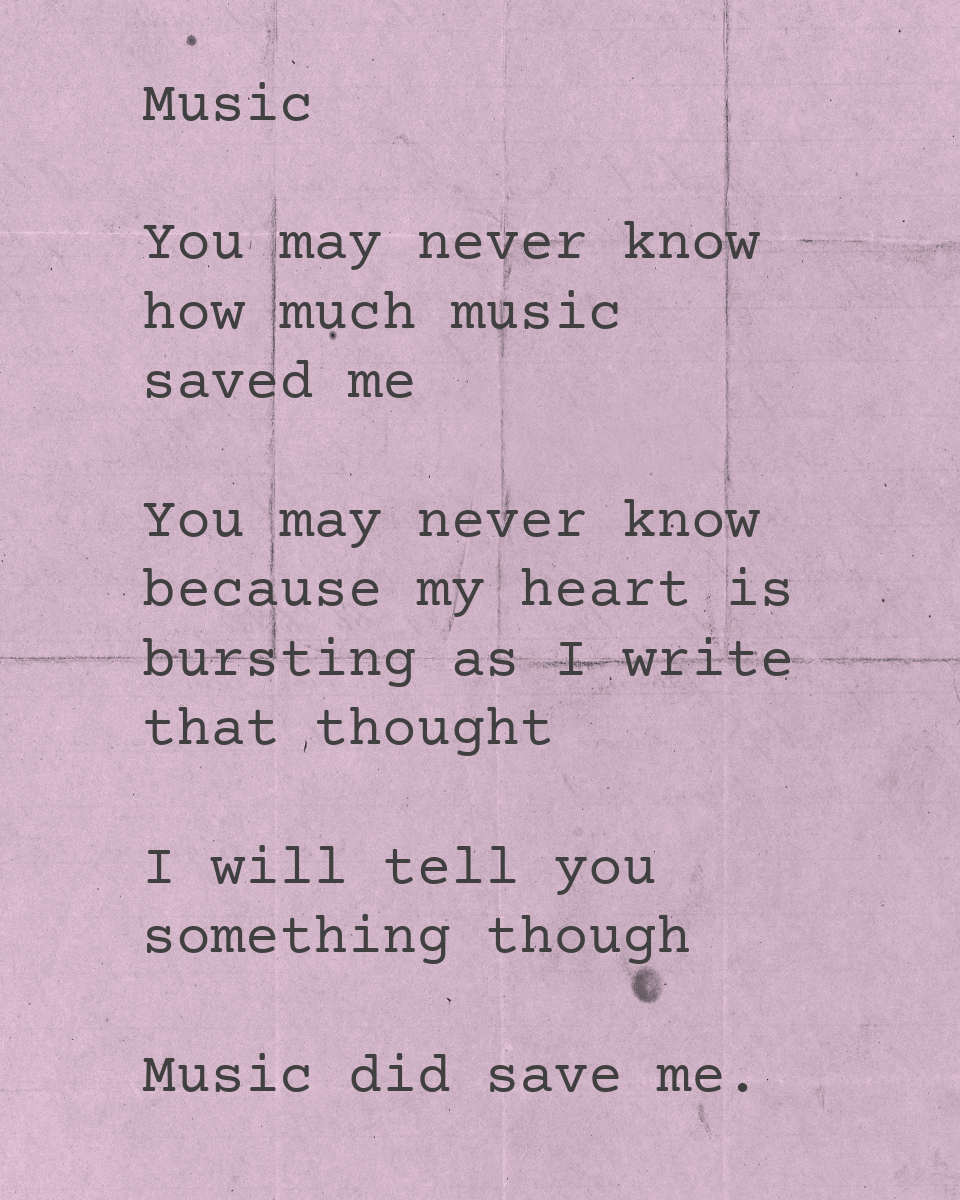
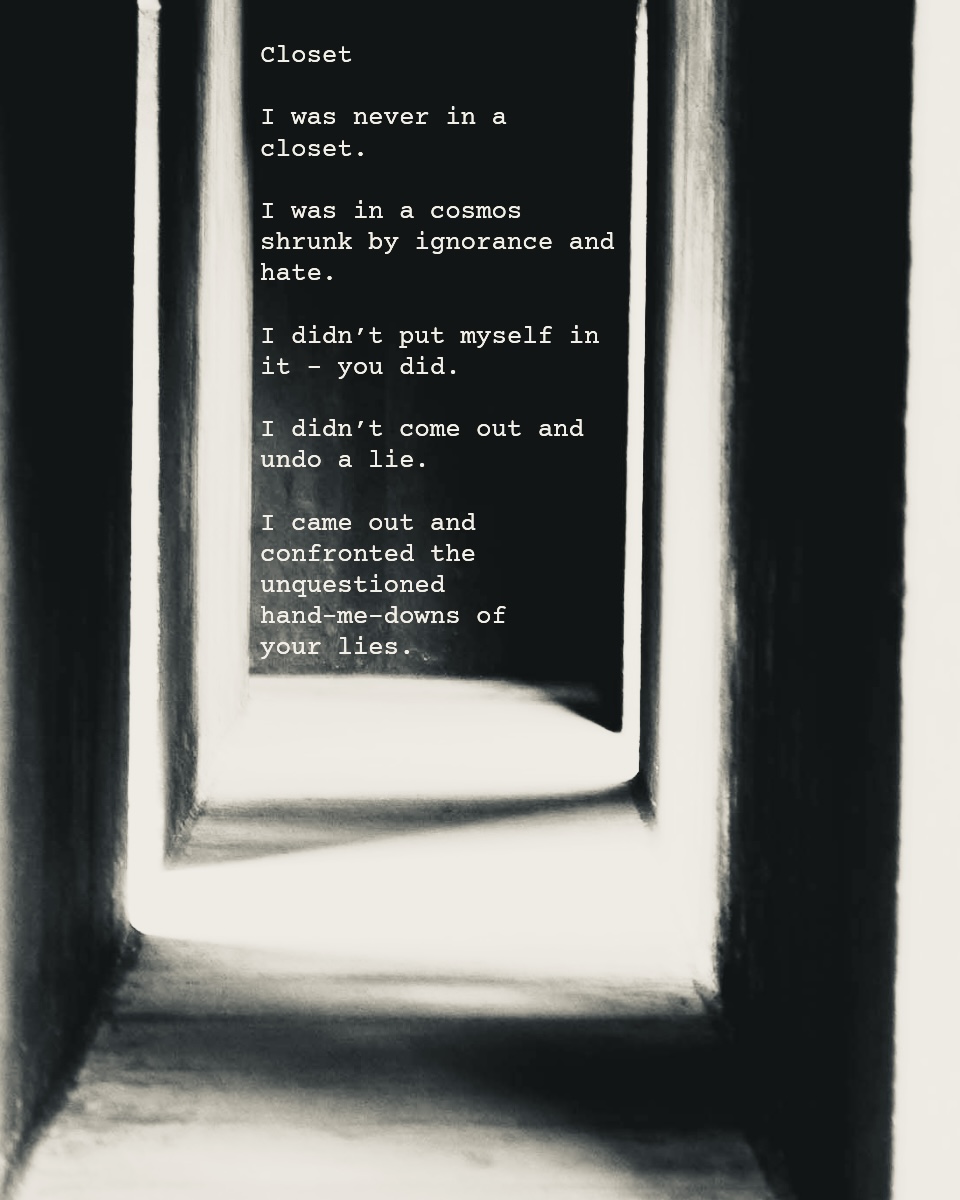
Biographical poetic sketches
“I concede only that I know nothing. I can only insist persistently that these fugitive musings on the Blackness of it all, the Black feminism of it all, the queerness of it all, are in the interest of saying things that have long been said but saying them differently, in hopes that some of y’all might get on board with this stuff that’s been circulating for a while”7. G

- De-colonial lenses born of my personal ancestral roots (Irish) and recognition of the oneness – that all oppressions, occupations and social structures are rooted in imperial and colonial extractive realities and the invention of race – inventions that create division and alienation from our connectedness and practices of relation with each other, the land and other lifeforms.
- The socio psychoanalytic infusion: Lynne Layton, Wilhelm Reich, Frantz Fanon, Lara and Stephen Sheehi, Dr Jenn Mullan, Foluke Taylor, Gail Lewis, Avgi Saketopoulou.
- Inspired by many (a few): James Baldwin, Toni Morrison, Joy James, Bernadette Devlin, James Connolly.
- Informed by a reckoning with racial capitalism, settler colonialism and the capture of the commons by the corporate state & empire that renders all of life precarious as described by Ruth Wilson Gilmore in her conceptualisation of ‘organised abandonment’.
- Robin D G Kelley and Fred Moten describe much of the ground in this video: https://youtu.be/fP-2F9MXjRE?si=_bOmdLbraQ6_9YMV
- Thoughtful about a therapeutic as a potential site of ‘wake work’ after Christina Sharpe’s In The Wake – On Blackness and Being. Sharpe describes Black life in the afterlives of enslavement and empire’s colonial legacies as they show up on the shores of the now. “This work belongs to us all” writes Foluke Taylor5 We are never outside of the wake.
- Feminism (not the liberal white version of feminism). Black feminisms rooted in the Black radical tradition. Feminism for the World rooted in disrupting legacies of the colonial including gendered constructs that embraces trans life and thought. Foluke Taylor has referred to the geography of black feminism as a “black feminist worksite”6 and Marquis Bey inspires me with these words about the ‘worksite’:
- Queering the lens – not the white queer lens that tends to forget about Blackness and anti blackness and regimes of capital – Judith Butler, Lauren Berlant, Sara Ahmed, Marquis Bey and many others. I am informed by a queerness that critiques and resists capture into a normative white hegemony of wilful participation in racial capitalism and empire logics at the expense of multiple life forms. Abeera Khan critiques this so fiercely when she writes:
“Common critical focus has been on the entry of queers into hegemonic social relations – gaining positions of institutional power, but also a pronounced ideological shift to centrist politics – but this is epiphenomenal. Homonationalism is the means, not end, of this entrance. The shift in the relation between liberal democracies, sexuality, and capitalism is what makes this opening possible in the first place. As more queers in liberal democracies gained purchasing power and actualised assimilatory bourgeois aspirations, they gained entry as homosexuals into dominant ideologies (the nuclear family, the free market, the national imaginary, and so on) and institutions (the military, the IMF, the border regime, the Home Office, the State Department, and so forth). Heterosexuality was no longer a necessary precondition for an ascendant position in capitalist social relations, so long as that non-heterosexuality still reproduced hegemony“8.
- Friendships that have made and unmade me in the project of becoming: Foluke Taylor, Jennifer Mullan, Gail Lewis, Lara Sheehi, Stephen Sheehi, Kriss, Bunmi, Gill, Paula, Kethi and from the 80s Bob the Marxist – my A level sociology teacher and socialist class mate Tom.
- The poets: Dionne Brand, nayirah waheed, Seamus Heaney.
- The thinkers: Joy James for her radical perspective and critique. James Baldwin for showing how to risk and speak fierce truth. Bernadette Devlin for joining up the interconnectedness of enslavement, resistance and colonial legacies. Fred Moten. Sylvia Wynter. Saidaya Hartman. Christina Sharpe.
- Writers, philosophers, thinkers & makers who have informed me (some, there are many): Saidaya Hartman, Rinaldo Wilcott, Dionne Brand, Gail Lewis, Foluke Taylor, George Yancy, Fred Moten, Rebecca Solnit, Alexis Pauline Gumbs, Marx, Cedric Robinson. Alana Lentin.
- Artists who have moved, inspired and informed me: Barby Asante, Asili Taylor, the Pre Raphaelites, Antony Gormley, Ansel Adams, Minor White, Ming Smith. This list is much longer.
- Spirituality – I didn’t meet much of it in the Irish Catholic Church, apart from those moments when we sang in harmony in the choir. More the kind of spirituality I met in the dark, alone in bed at night floating amongst stars. More the kind of spirituality I met when out in the wilds and mysteries of sacred land (Ireland in this instance). More the kind of spirituality I met in books of poetry and the poetics of critical theory and (psycho)analysis. More the kind of spirituality that is not a white patriarchal anthropomorphised entity and more of a God is Change (Octavia Butler), a mystery, all of us and everything and no thing in particular. More the kind of spirituality that goes beyond the spiritual by passes of a neoliberal individual self care project and more of a sacred form of collective activism, mutual care and life making.
- More the “Isness” of Lata Mani.
- The Diamond Approach – as both student and teacher of this path that has served to loosen up the arrangements born of traumatic legacies and the internalisation of colonial and neo liberal hegemonies whilst recognising that in our nature something thankfully contends with these impingements that resists and makes life otherwise – the mysterious nature of everything. Spirit having flown.
- Art practice: – these days it shows up as more of a psycho/social/spiritual art practice having started out as a photographer.
- Music: Stevie is a Wonder, Anaiis, Ganavya, Alice Smith, Erykah Badu, Björk, Jill Scott. This list does not end… Rufus + Chaka Khan. Luther. Donny Hathaway. Rachelle Ferrell. Lisa Fisher. aja monet.
Published work includes:
Listening in Colour: Creating a Meeting Place with Young People Robert Downes, Sue Lee, Foluke Taylor-Muhammad (Young People in Focus 2002).
Chapter: Reimagining the Space for a Therapeutic Curriculum – a Sketch, (co-authored with Foluke Taylor in Black Identities and White Therapies: Race Respect and Diversity. PCCS 2021).
Chapter: Queer Shame: notes on becoming an all-embracing mind (in Queering Psychotherapy, Edited by Jane Chance Czyzselska, Confer Books 2022
Otherwise : A murmuration of resources gathered by Robert & Foluke to resource their on going project of therapeutic wake work (Christina Sharpe).
Substack: Complicating the White Therapist Decommissioning whiteness in therapeutic thought and practice.
Otherwise: “Can you meet me where we are instead of where you want to be?” A correspondence between CeCe & Niall written by Foluke Taylor and Robert Downes
Art making: Disrupting Coloniality in the K/now a Lara Sheehi inspired project.
Whispering: a response to a dialogue between Gail Lewis and Foluke Taylor.
Video: Black Feminist Murmurations
Psychosocial Art Makings: Robert collaborates with colleagues and friends to make living room for thought and care that offers something of what we need to navigate the ‘present conjuncture’. (Stuart Hall).
Chapter study:
Video: Chapter 8: Sacred Rage from Decolonizing Therapy –
Oppression, Historical Trauma & Politicizing Your Practice by Dr Jennifer Mullan. Foluke Taylor, Dr Gail Lewis, Nic Frealand & Robert Downes shared their responses to this chapter.
Chapter study:
Video: (M)otherlands (looking for who made this mess)
Conversations in June Jordan’s Living Room : with Foluke Taylor, Dr Gail Lewis, Alexis Pauline Gumbs, Nydia A. Swaby, Eddie Bruce Jones & Robert Downes sharing their responses to this chapter from Foluke Taylor’s book: Unruly Therapeutic – Black Feminist Writings and Practices in Living Room.
- Stuart Hall. “I would say that the object of my study is not sociology, or cultural studies, or anthropology, or literature, et cetera. The object of my intellectual work, insofar as I am an intellectual, is what I would call the present conjuncture. It’s the history of the present. It’s what is the condition in which we now find ourselves, and how did we get there? And what forces are creatng it in order that we might understand how I might do something about it”. Through the Prism of an Intellectual Life. ↩︎
- Foluke Taylor Unruly Therapeutic Black Feminist Writings and Practices in Living Room. ↩︎
- Dr Jennifer Mullan, Lara & Stephen Sheehi, Frantz Fanon amongst many others. ↩︎
- Elite Capture ↩︎
- Foluke Taylor Unruly Therapeutic Black Feminist Writings and Practices in Living Room. ↩︎
- Foluke Taylor. ↩︎
- Them Goon Rules Fugitive Essays on Radical Black Feminism by Marquis Bey ↩︎
- Liberalism as Fascism’s Prefiguration by Abeera Khan ↩︎
 ROBERT DOWNES